“Black carbon” in the Arctic is a growing concern among other issues in the region

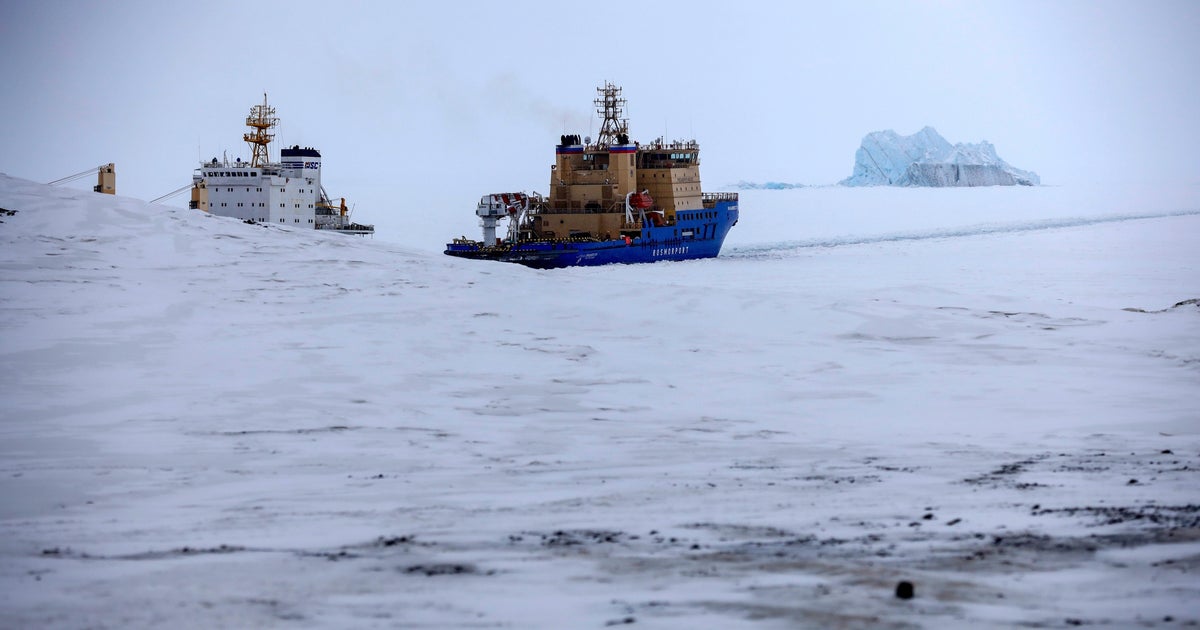
Reykjaviik, Iceland – As rising global temperatures accelerate the melting of sea ice in the Arctic Ocean, it has resulted in more ships taking over previously frozen and impassable routes.
The increase in Arctic maritime traffic, which received more attention as the President Trump forced America to take over Greenlandit came with a huge environmental cost: black carbon, or soot, that comes from ships and makes the ice melt much faster. In meetings this week with international shipping regulators, several countries made the case for Arctic shipping to use cleaner fuels that cause less pollution.
Glaciers, ice and snow covered in soot from ships have little ability to reflect the sun. Instead, the sun’s heat is absorbed, helping to make the Arctic the fastest warming place on Earth. Also, the melting of the Arctic sea ice may affect the global climate.
“It ends up in a never-ending cycle of increased warming,” said Sian Prior, lead adviser for the Clean Arctic Alliance, a coalition of Arctic-focused nonprofits and shipping. “We need to control black carbon emissions, in particular. Both are completely out of control in the Arctic.”
In December, France, Germany, the Solomon Islands and Denmark proposed that the International Maritime Organization require ships sailing in Arctic waters to use “polar fuels,” which are lighter and emit less carbon pollution than the more widely used marine fuels known as fossils. The proposal also includes steps companies can take to comply and where they will operate – all vessels traveling north of the 60th parallel. The proposal was expected to be presented to the IMO’s Pollution Prevention and Response Committee this week and possibly another committee in April.
A 2024 ban on using a fossil fuel known as heavy oil in the Arctic has had little impact so far, partly because of loopholes.
Alexander Zemlianichenko / AP
“Black carbon” fueling other regional issues
The push to reduce black carbon, which research has shown has a warming effect 1,600 times greater than carbon dioxide over a 20-year period, comes at a time of conflicting interests, both internationally and among Arctic coastal countries.
In recent months, Mr. Trump’s occasional statements about the need to “own” Greenland to strengthen US security have raised many issues, from Greenland’s sovereignty to the future of the NATO alliance. Pollution and other environmental problems in the Arctic have taken a back seat.
Mr. Trump, who called climate change “a subterfuge,” has also backfired against international policies aimed at combating it. Last year, the IMO was expected to implement regulations that would have imposed a carbon fee on shipping, which supporters say would have forced companies to use cleaner fuels and electrify ships where possible. Then Mr Trump intervened, urging countries to vote no. The measure has been postponed for a year, its prospects uncertain. Given that, it’s hard to see the IMO making rapid progress on the current proposal to limit black carbon in the Arctic.
Even within the Arctic nations, which are most affected by black carbon and other pollution from ships, there is internal disagreement about such laws. Iceland is a good example. Although the country is a world leader in green technologies such as carbon capture and the use of heat energy, conservationists say the country has made little progress in controlling ocean pollution. This is because the fishing industry, one of the most important in the country, has great potential.
“The industry is happy with profits, unhappy with taxes and not involved in issues like climate or biodiversity,” said Arni Finnsson, chairman of the board of the Iceland Nature Conservation Association.
Finnsson added that the cost of using clean fuel or electric vehicles also caused resistance.
“I think the government is waking up, but they still have to wait for the (fishing) industry to say yes,” he said.
The country has not taken a position on the pending polar fuel proposal. In a statement, Iceland’s Ministry of Environment, Energy and Climate said the proposal was “good in terms of its purpose and basic content” but further research was needed. The statement added that Iceland supports strong measures to combat emissions and reduce black carbon.
More sea travel means more soot in the air
Pollution has increased in the Arctic as cargo ships, fishing boats and even other cruise ships ply the waters connecting the northern parts of Iceland, Greenland, Canada, Russia, Norway, Finland, Sweden and the United States.
Between 2013 and 2023, the number of ships entering waters north of the 60 parallel has increased by 37%, according to the Arctic Council, an intergovernmental forum made up of eight countries with an Arctic location. During the same period, the total distance traveled by ships in the Arctic increased by 111%.
Black carbon emissions have also increased. In 2019, 2,696 tons of black carbon were emitted from ships north of the 60th parallel compared to 3,310 metric tons in 2024, according to a study by Energy and Environmental Research Associates. Research has found that fishing boats are a major source of black carbon.
It also found that a 2024 ban on heavy oil would lead to a small reduction in black carbon. The waiver and exception allows some ships to continue using it until 2029.
Environmental groups and concerned countries see regulation of ship fuel as the only way to truly reduce black carbon. That’s because getting countries to agree to restrict traffic is nearly impossible. The lure of fishing, extracting resources and short transport distances is great. Ships can save days on certain journeys between Asia and Europe by sailing in the Arctic.
However, the route known as the Northern Sea Route is only navigable for a few months of the year, and even then ships must be accompanied by icebreakers. Those risks, combined with concerns about Arctic pollution, have prompted some companies to promise to stay away — at least for now.
“The debate surrounding the Arctic is intensifying, and commercial shipping is part of that conversation,” wrote Søren Toft, CEO of Mediterranean Shipping Company, the world’s largest container shipping company, in a LinkedIn post last month. “Our position in the MSC is clear. We do not and will not use the Northern Sea Route.”