Transcript: Kevin Hassett on “Face the Nation with Margaret Brennan,” Dec. 14, 2025

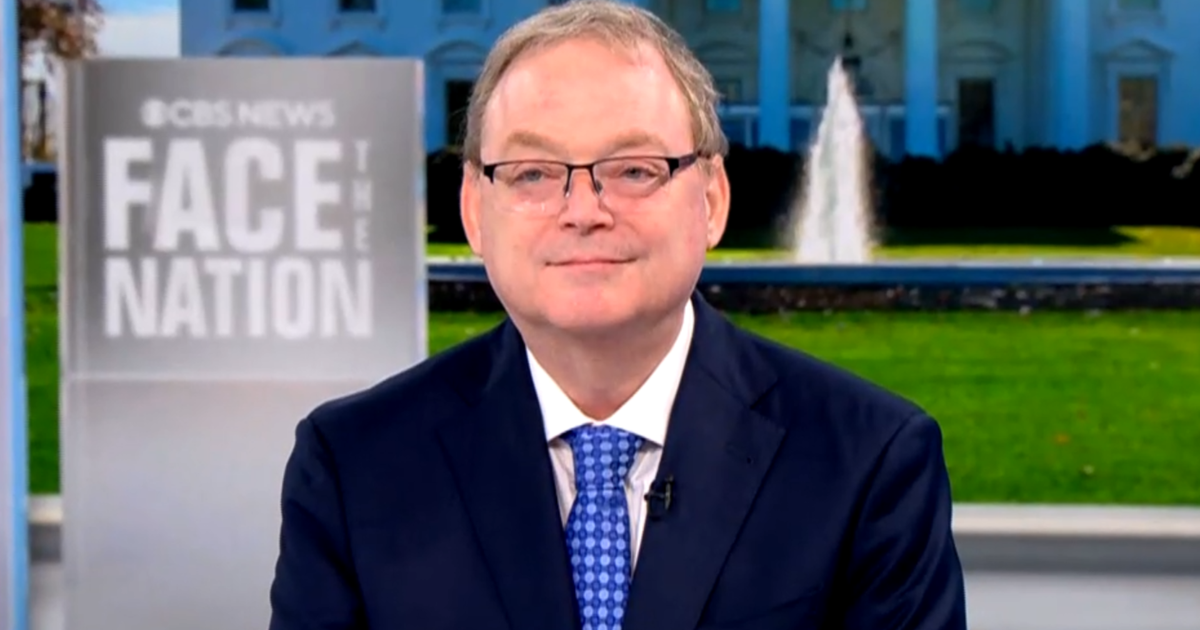
The following is a transcript of an interview with White House National Economic Council Director Kevin Hassett that aired on “Face the Nation with Margaret Brennan” on Dec. 14, 2025.
MARGARET BRENNAN: Welcome back to “Face the Nation.” We are now joined by the Director of the National Economic Council, Kevin Hassett. Good to have you back.
KEVIN HASSETT, NATIONAL ECONOMIC COUNCIL DIRECTOR: It’s great to be back.
MARGARET BRENNAN: So people will shop for the holidays. They know the prices. The president said that this week the prices are going down a lot. The latest data, however, from the Consumer Price Index rose 3% year-on-year, the personal consumption index rose 2.8% year-on-year. What data is he looking for? What is your benchmark?
HASSETT: All right. Well, one of the things is if you saw his presentation in Pennsylvania, as he puts up a bunch of charts, which he likes to do, where he goes over individual things that we’re already making progress on. And then, for example, under Joe Biden, prescription drugs were up 9%. So far this year, they are down six percent. Fuel is very low. It was like the highest under Biden–
MARGARET BRENNAN: –Eggs, he was talking about eggs, yes.
HASSETT: Yes, he was talking about eggs. So I think the way to think about inflation is, of course, that there are little effects like when we have bird flu that affects drug prices. And then there are the big effects, which are spending, big deficits and the Fed’s accommodative policy. And I think–
MARGARET BRENNAN: –But now prices are adding to inflation according to the Fed chair.
HASSETT: Well, I know, I think the tax evidence is mixed. But the point is that we have a deficit going forward, very low. So right now, it looks like this year’s deficit will be $600 billion less than last year. That really helps with inflation. The trade deficit has been cut in half since last year. And so all of these things are things that should continue to drive us toward the Fed’s 2% target.
MARGARET BRENNAN: Companies aren’t going to discount things, though, in terms of price, right? I mean, the president told the Wall Street Journal that he doesn’t know when all this money will, quote, “come in.” I think he was talking about business investment and taxes, and helping voters, “all I can do is do my job.” When do you expect voters to feel this positive impact?
HASSETT: All right. Well, that’s right, and you guys have it pretty much covered, that consumer sentiment right now is lower than anyone would like. But, you know, we find that often happens during a government shutdown when everybody’s really upset–
MARGARET BRENNAN: Well, the last administration called that “vibecession,” right?
HASSETT: No, but–
MARGARET BRENNAN: –the data is good, but people feel bad.
HASSETT: –Yeah, but what’s going to happen is —
MARGARET BRENNAN: –It’s the same, what you’re saying.
HASSETT: No, I’m not saying that. What I mean is that people will see higher growth. Growth is 4%. Revenue growth is up nearly $1,200 this year. People look at their wallets and see they’re doing better, that’s why we had the biggest Black Friday ever and so on and so forth–
MARGARET BRENNAN: But that’s a high income of —
HASSETT: –Feeling will match reality. Under Joe Biden, the reality is that real purchasing power has dropped by about $3,000. So far this year, it has increased by about $1,200 per family. And this money we are talking about is like real money. So by purchase, it went from $400 a month to $525 a month under Biden. So that equates to over $1,000 a year. You should use groceries. It’s down this year for us, with the grocery package, but there’s still a lot of room to grow – so you can go.
MARGARET BRENNAN: There’s still a long way to go–
HASSET: Yes.
MARGARET BRENNAN: And the president is lowering taxes on some of those food items–
HASSETT: –In foodstuff–
MARGARET BRENNAN: –with an eye toward that.
HASSETT: Well, if we don’t succeed here, then we don’t tax it.
MARGARET BRENNAN: Let me ask you, you mean gas. Global oil prices are relatively low. We saw this Coast Guard blockade when the military boarded and seized this ship off the coast of Venezuela. Do you feel that you have freedom there, in terms of price, to hold more people or to block the oil from Venezuela, without harm?
HASSETT: Well, I’m not a foreign policy person, so what we’re doing about Venezuela and what we’re blocking is the president and Marco Rubio. But I can say that–
MARGARET BRENNAN: –But you’ve got a way, right–
HASSETT: –that–what would happen is that there would be some kind of oil market between the kind of countries that are allowed. And what we’re doing is shutting down that black market. Whether that affects prices outside of authorized countries is an open question. Probably not.
MARGARET BRENNAN: You don’t think it will happen?
HASSETT: No, because they are like ropes, these countries. They only get oil when they get some kind of dark ships to come in and give them oil. And that’s what we’re trying to slow down.
MARGARET BRENNAN: Okay, I want to ask you about the Fed decision. The Federal Open Market Committee said job gains slowed this year. We also saw a survey from the Business Roundtable. I’m sure you’ve seen it. They asked CEOs what they expected to happen, and they expected employment to decline in 2026 rather than increase. Are you worried about declining employment?
HASSETT: The same Fed said they were very bullish on growth next year, right? And so I think we’re at some point–
MARGARET BRENNAN: But in the job picture.
HASSETT: But on the jobs picture, you know, we’ll get data next week. And then maybe next Sunday I’ll come back and we’ll talk about it, because we have two months of data coming out on Tuesday. And we’re going to get a clearer picture because right now we’re having a very hard time pinning surveys like the gold standard for this to really be a household survey, which we don’t even get in October.
MARGARET BRENNAN: But these are CEOs. They are the people who will be hiring, right? And they say, we don’t.
HASSETT: But, but they don’t have a broad view of what we’re going to get when we get the big data released next week.
MARGARET BRENNAN: And do you trust that big data?
HASSETT: I trust home research, especially. And sadly, we won’t have it in October. But we will find out in November. And that will be very important in thinking about where the job market is.
MARGARET BRENNAN: Employment is one of the things the Fed watches a lot. And we’ve also heard from the president that he’s on the short list to be the next Fed chairman, even though he’s been in talks this week. He said you and Hoover’s Kevin Warsh were at the top of the list. On Friday, the president was asked how big a role he personally wants to play in the Fed’s future interest rate decisions. Listen.
[SOUND ON TAPE BEGINS]PRESIDENT DONALD TRUMP: I think I should be involved in talking to whoever is the head of the Fed, or the Fed. I don’t think so – you know the good old days. Today, it’s kind of, they think it shouldn’t happen. But I did a lot. I made a lot of money, I was very successful. I think my voice should be heard.
[SOUND ON TAPE ENDS]MARGARET BRENNAN: As the chair of the Fed, how often can you consult with the president if he says he wants his voice heard?
HASSETT: Well, right now I’m the president’s top economic adviser, and I talk about almost everything with him almost every day. Of course I talked about monetary policy. I think you have strong and grounded ideas about what we should do. But ultimately, the job of the Fed is to be independent and to work with a group of people on the Board of Governors, on the FOMC, to drive group consensus on where interest rates should be and to do so, you know, basically at the direction of the Fed chair. But in the end, it’s the committee that votes. And I’d be happy to talk to the president every day, you know, until we both die because it’s so much fun to talk–
MARGARET BRENNAN: Even if you were the Chair of the Fed.
HASSETT: Whether I was the Fed Chair or I wasn’t the Fed Chair. You know what, I would hope that Kevin Warsh would be talking to the president if he was Fed Chairman.
MARGARET BRENNAN: And the voice should be heard that will be–
HASSETT: You know, every Fed Chairman talks to a lot of market experts–
MARGARET BRENNAN: –Are you the same as the other members- the voting members or?
HASSETT: Excuse me?
MARGARET BRENNAN: Can the president’s voice carry equal weight with the voting members?
HASSETT: No, no, he wouldn’t weigh. His opinion only matters if it’s good, you know, if it’s based on data. And then when you go to the committee and you say, well, the president made this argument and that’s a really valid argument, I think, what do you think? If they refuse, they will vote the other way.
MARGARET BRENNAN: Understood. Well, we’ll be watching to see what happens. Kevin Hassett.
HASSETT: It’s good to be here.
MARGARET BRENNAN: Thank you as always. We will be right back.