NEWNow you can listen to Fox News articles!
When Benny Sabti was a child growing up in Iran, he remembers receiving an unusual award at school. “Being a good reader, I found a Persian version of Adolf Hitler’s Mein Kampf,” Sabti told Fox News Digital. “They translated Hitler’s book into Persian and distributed it to the students.”
The experience stayed with him. Looking back, Sabti, who is now an expert on Iran at the Institute for National Security Studies (INSS) in Israel, says that this showed a broad effort by the ruling clerical organization in Iran to shape the way Iranian youth view politics, religion and the world around them.
Schools, mosques, workplaces and the media all became part of an ecosystem designed to strengthen loyalty to the government. But critics of Iran’s leadership say religion itself was not the main objective.
“Faith for them is their tool,” Banafsheh Zand, an Iranian-American journalist and editor of the Iran So Far Away Substack, told Fox News Digital. “It’s not the end all. It’s a tool they can hide behind to do all their crimes.”
Elementary school girls wearing traditional headscarves sit in a classroom, Tehran, Iran, Oct. 1, 1997. (Kaveh Kazemi/Getty Images)
Religion and power
The Islamic Republic was founded on the doctrine of velayat-e faqih, or “guardianship of the Islamic jurist,” which placed supreme political and religious authority in the hands of the country’s supreme leader.
But Zand argues that the program actually functions less as a purely religious project and more as a means of political control. “It’s like the mafia,” he said. “They use faith to keep people down.”
According to Zand, ideology is reinforced through a mixture of financial benefits and intimidation. “They tried with motivation and money to buy people,” he said.
Programs linked to the Basij, a military force linked to the Islamic Revolutionary Guard Corps (IRGC), often provided benefits such as jobs, housing and education to families affiliated with the regime.
“If you suffer and join the Basij, they give you benefits,” said Zand. “But you have to go with whatever they give you.”
Ideology is rooted in everyday life
Sabti says the Islamic Republic is building a large network designed to reinforce ideas in everyday life. “In banks, offices, public places and even markets, government representatives walk between shops telling people that it is time to pray and see who is not coming,” said Sabti.
The mosques themselves are closely integrated into the political system. Friday prayer leaders often deliver sermons that align with government messages.
“There are 16 propaganda agencies in Iran,” said Sabti, describing the network of state institutions responsible for spreading the state’s interpretation of Islam and the ideology of the Islamic Revolution.
Other institutions are also focused on sending that idea abroad. “There is a university dedicated to converting Sunnis to Shiism,” he said. “They brought people from Africa and South America to Iran, converted them to Shiism and sent them back to export the Shiite Islamic revolution.”
OPERATION EPIC FURY: HOW AMERICAN AIR POWER BREAKED IRAN’S DIFFERENCE
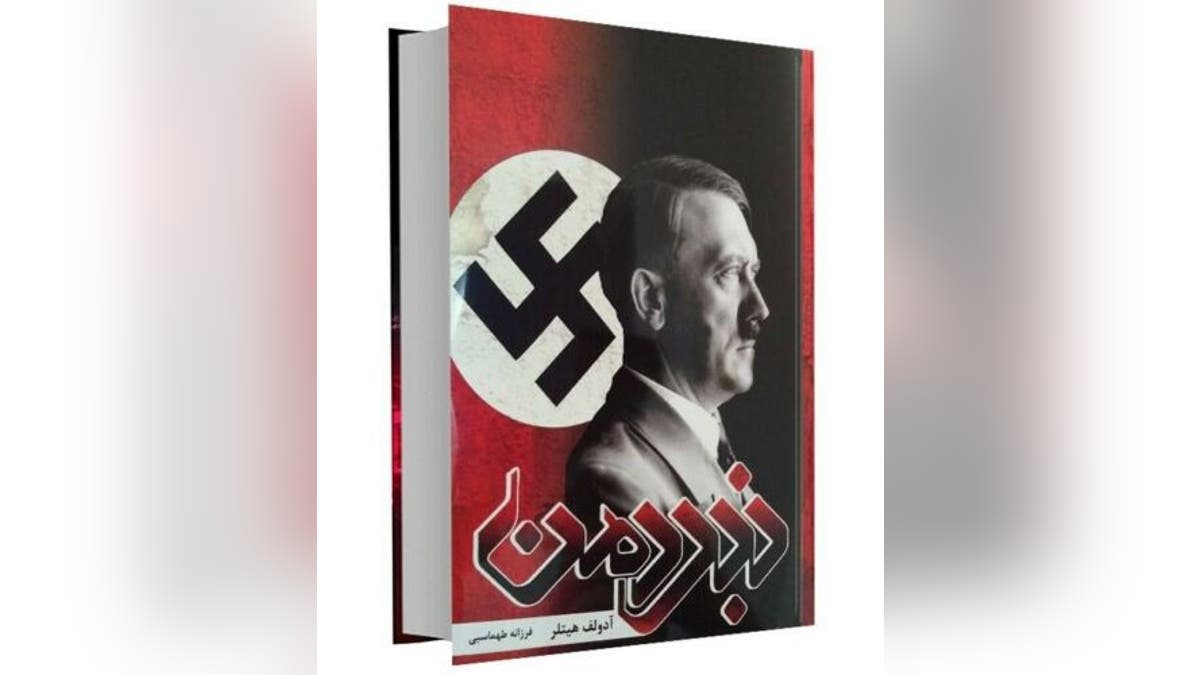
Adolf Hitler’s Persian grammar of Mein Kampf.
Indoctrination in schools
Schools play an important role in the ideological system of the state.
“The schools are very educational,” said Sabti. “In social studies textbooks, Islam was promoted as superior to all other ideologies.”
Religious messages appear in all subjects. “You cannot separate any school subject from Islam,” said Sabti. “Not history, not geography. Everything is mixed with ideas. The only thing missing is adding it to the math.”
In Sabti, a passage from Mein Kampf shows the ideological environment that readers are exposed to. He said that this message strengthened the hostility towards people who are considered as enemies and instilled a political perspective from a young age.
Ideology and hypocrisy
Sabti says the program’s credibility is also undermined by the behavior of Iranian officials. “You can see it in the second generation,” he said. “Their children live abroad and the nobles live in palaces in Iran and other countries. It is hypocritical.”
Zand says that ideas have been reinforced by intimidation. “They set examples for people in a brutal way,” he said. “Fear and deception.”
According to Zand, that atmosphere of fear shapes everyday life for many Iranians. “Everyone is afraid of the police,” he said. “Everyone is afraid of his neighbor.”
WORLD LEADERS DIVIDE IN FACE-TO-FACE ACTION AS US-ISRAEL HITS IRAN WITH COORDINATED OPERATIONS
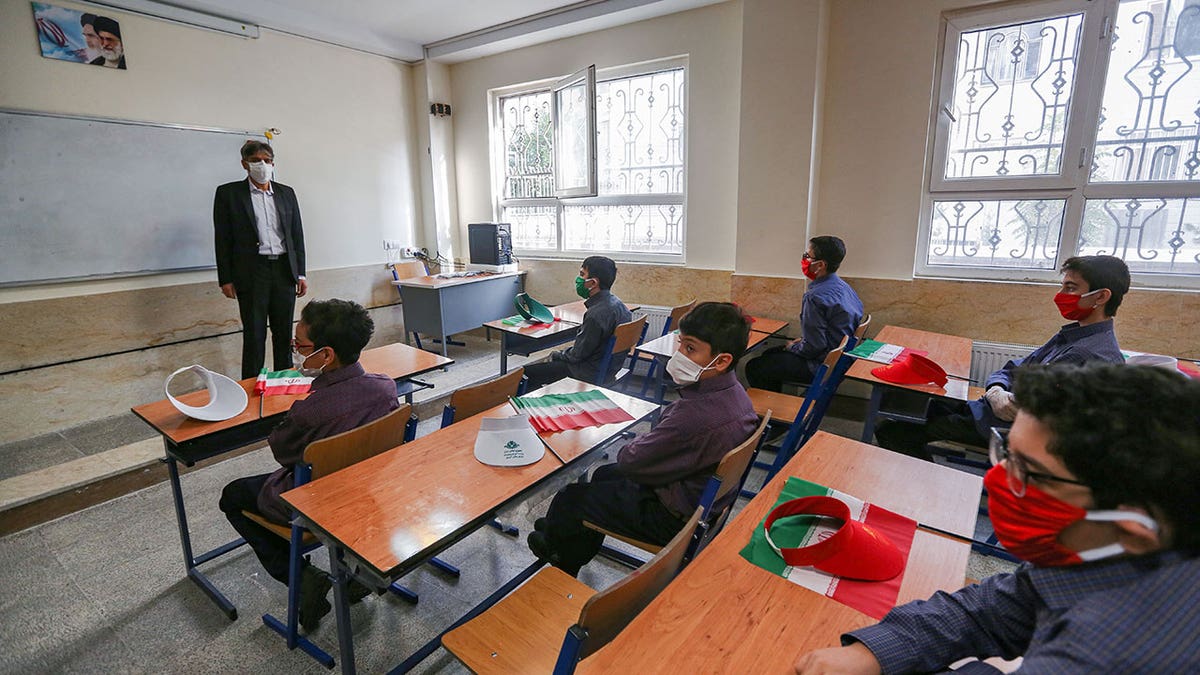
School children sit together in a classroom while wearing masks and keeping a distance from each other, with Iranian national flags on each desk, on the first day of school opening, at Nojavanan school in the capital Tehran on September 5, 2020. (Photo by Atta Kenare/AFP/Getty)
It’s a waning idea
Despite the state’s extensive machinery, Sabti believes that many Iranians have never fully embraced the worldview that the government is trying to impose.
“Over the years, teaching has stopped working,” he said. “Most of the public doesn’t really believe that.”
Nevertheless, the Islamic Republic is still in power. “The state controls money, weapons and propaganda,” said Sabti.
Zand admits that the program has never fully shaped Iranian society. He said many people listen to that outside to avoid punishment.
CLICK HERE TO DOWNLOAD THE FOX NEWS PROGRAM
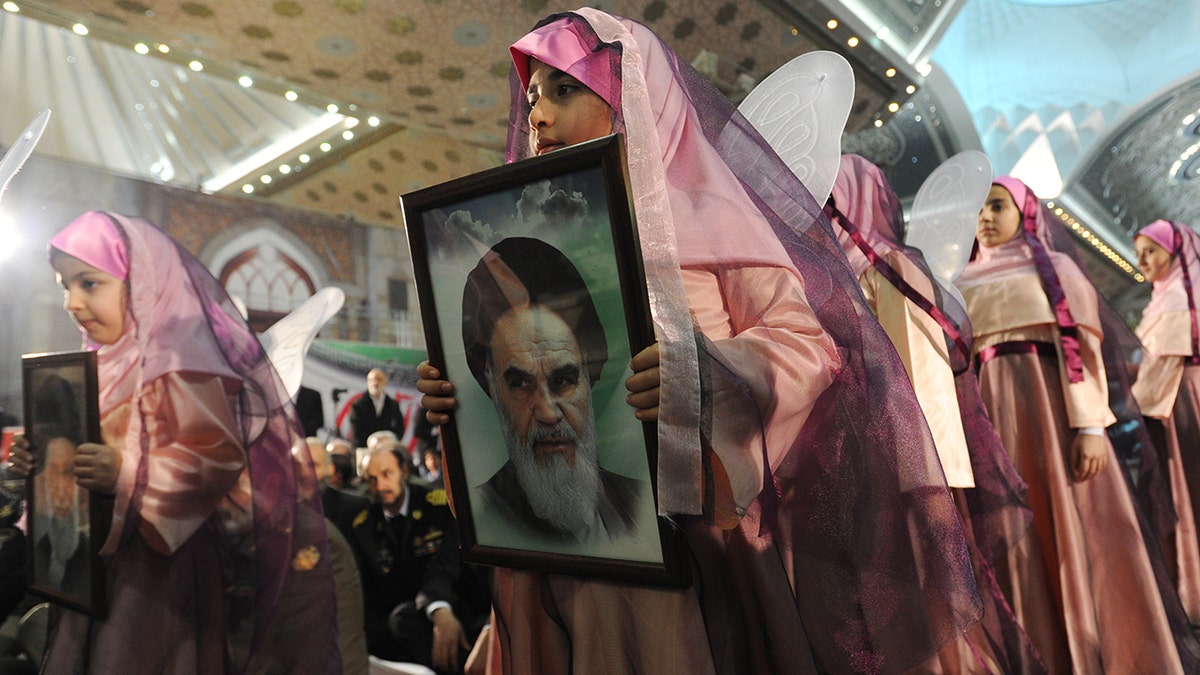
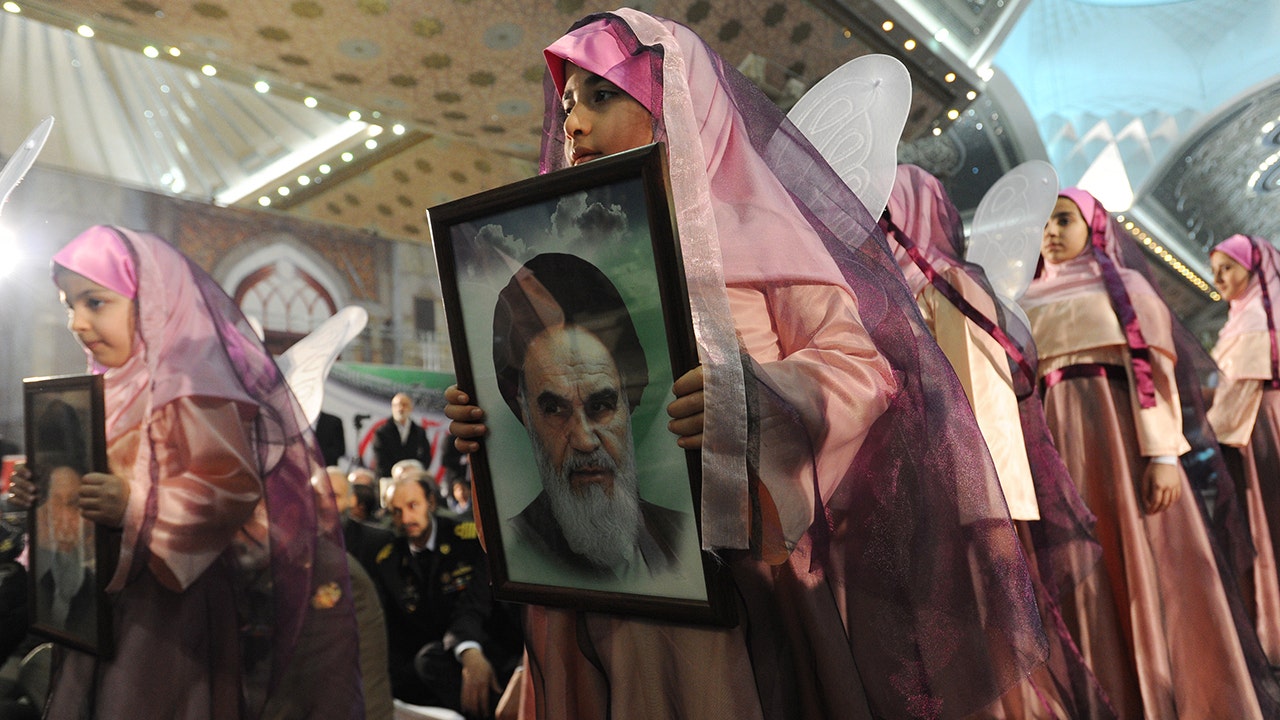
Iranian schoolgirls wearing angel wings carry flags and portraits of Iran’s top leaders, past and present, as officials and security forces celebrate the 37th anniversary of the day in 1979 when the father of Iran’s Islamic revolution, Ayatollah Ruhollah Khomeini, returned from exile in France, to a shrine built to house his remains on Feb. (Scott Peterson/Getty Images)
“They will have no problem transferring as long as they see that the new Iran has no place for the violence and the horrifying aspects of the Islamic State,” Zand told Fox News Digital.
He said that beneath the surface, Iran’s cultural identity remains strong even after decades of pressure from the government.
Related Article